




Livelihoods India Case Study Competition
Livelihoods India Case Study Competition
The Livelihoods India Case Study Competition is a pioneering initiative that brings together the collective intellect of the sector and assimilates innovative solutions, breakthroughs, experiences, and best practices that help in learning from diverse sector experience and impact poverty reduction. Instituted in 2009 by ACCESS, the competition is a tool to identify and collate models and best practices that have significantly contributed to livelihoods promotion of the poor in India. ACCESS announces the Livelihoods India Case Study Competition 2025.
Livelihoods India Case Study Competition
The Livelihoods India Case Study Competition is a pioneering initiative that brings together the collective intellect of the sector and assimilates innovative solutions, breakthroughs, experiences, and best practices that help in learning from diverse sector experience and impact poverty reduction. Instituted in 2009 by ACCESS, the competition is a tool to identify and collate models and best practices that have significantly contributed to livelihoods promotion of the poor in India. ACCESS announces the Livelihoods India Case Study Competition 2025.
Case Study Competition

7th September, 2025
Innovations in Urban Livelihoods
India is among the world’s fastest-growing economies, with ambitions to reach a US$5 trillion economy by 2026 and US$40 trillion by 2047. Economic development and urbanisation are closely intertwined, with Indian cities emerging as engines of growth. Although they occupy just 3% of the country’s land, cities contribute an impressive 60% to India’s GDP.
By 2030, India’s urban population is expected to exceed 600 million, with over 40% of the population living in urban areas. At the same time, 7 to 8 million young people will enter the workforce annually, placing India in a strong position to leverage its demographic dividend. However, this will also lead to increased reliance on cities for employment, livelihoods, and economic stability.
To address the livelihood challenges of rapid urbanisation and ensure inclusive growth, the Government of India has implemented the National Urban Livelihoods Mission (NULM), which aims to reduce urban poverty by providing skill development, self-employment opportunities, and support for the urban poor. Building on this foundation, a pilot New Mission on Urban Poverty Alleviation has been launched in 25 Indian cities with an outlay of 180 crore is in league of the initiatives undertaken to holistically support the most vulnerable – construction workers, transportation workers, gig workers, care workers, waste workers and domestic workers with sustainable livelihoods.
Micro, Small and Medium Enterprises (MSMEs) and startups are playing a key role in driving India’s economic growth and supporting urban livelihoods. With over 5.93 crore registered MSMEs and more than 1.57 lakh startups, India now ranks as the world’s third-largest startup ecosystem. While major cities continue to lead this growth, smaller cities and peri-urban areas are also seeing a rise in entrepreneurial activity. In fact, over half of all MSMEs are now based in Tier II and Tier III cities, showing their increasing importance. This shift is reshaping the urban livelihoods landscape—creating jobs, encouraging innovation, and opening up new opportunities across sectors.
This transformation offers immense opportunities while it also poses complex challenges that necessitate strategic policy interventions, inclusive economic frameworks and sustainable development approaches. As the urban livelihoods system evolves, innovations in employment, while ensuring equitable access to resources, social protection mechanisms and ease of doing businesses are amongst the renewed focus that will be crucial in building sustainable livelihood systems for the vulnerable population.
Across India, pioneering urban livelihood models have emerged through the collaborative efforts of governments, apex institutions, civil society organizations, and the private sector. These models have demonstrated groundbreaking innovations that can serve as blueprints for inclusive urban growth shaping policy and practice.
To recognize and amplify these transformative efforts, the Livelihoods India Case Study Competition 2025 is themed as ‘Innovations in the Urban Livelihoods’. The Competition invites entries showcasing scalable innovations, across areas such as informal economy (street vendors & hawkers, waste management, domestic workers), mobility and logistics, gig and platform based work, home based enterprises, self-employment and micro entrepreneurship among others.
- All participants are requested to apply for the Livelihoods India Case Study Competition 2025 with their case study abstract, not exceeding 700 words, by 15th July, 2025
- The abstracts should be uploaded in word document format only (file size up to 10 mb) in the google form
- The shortlisted candidates will be requested to send the full case study, not exceeding 5000 words, by 7th September, 2025
- Once the final cases are submitted, they will be reviewed and ten best cases will be selected by a Technical Committee
- The authors of the 10 best cases will be invited to present their cases before an eminent Jury, whereby the top 3 cases will be selected
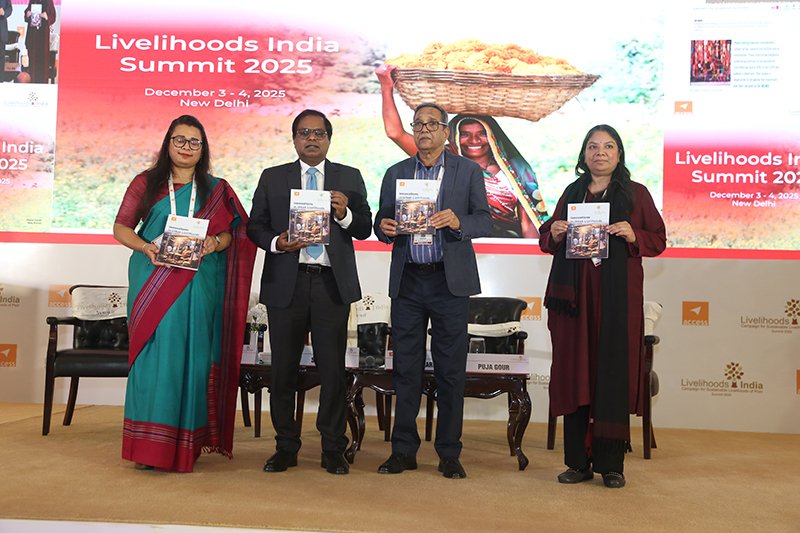
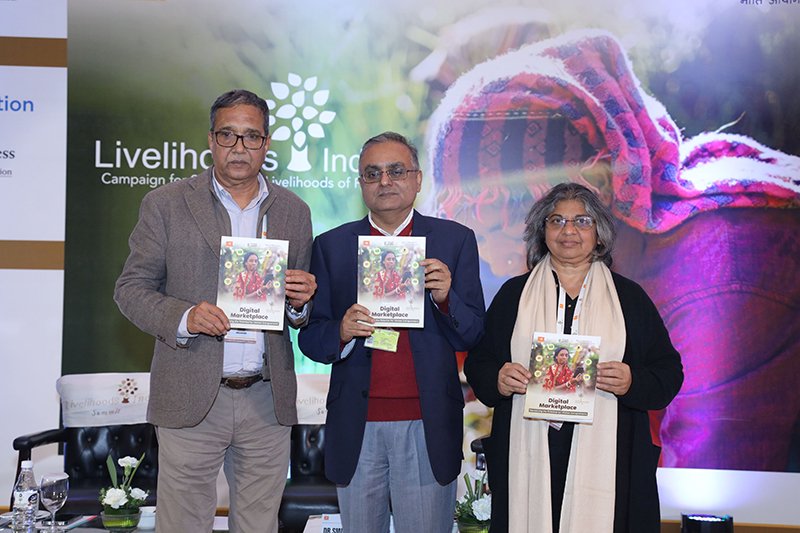
- A compendium of the 10 best cases will be released during the Summit.
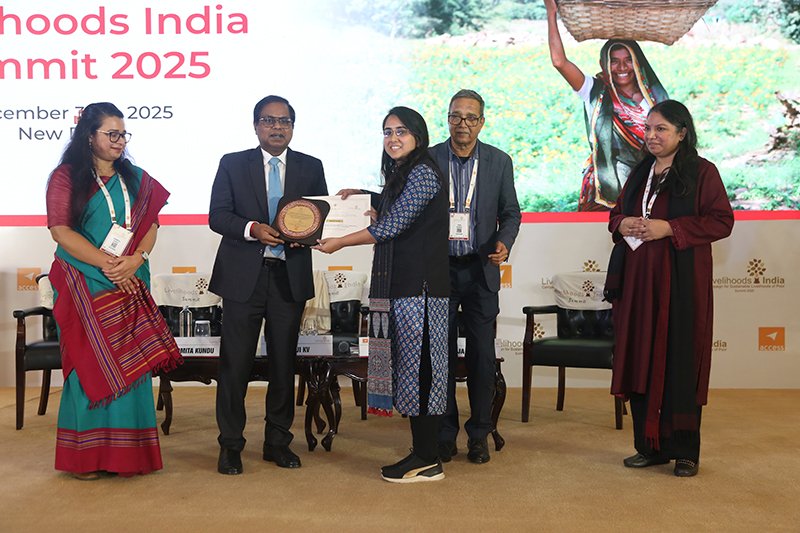
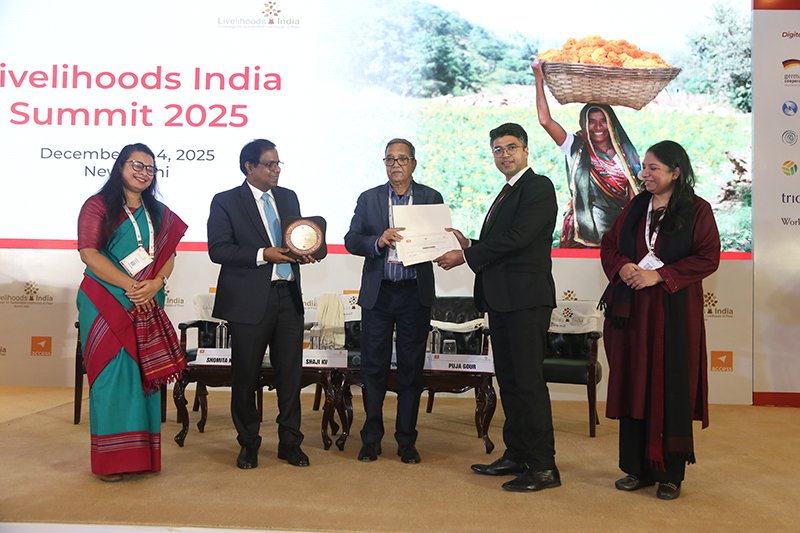
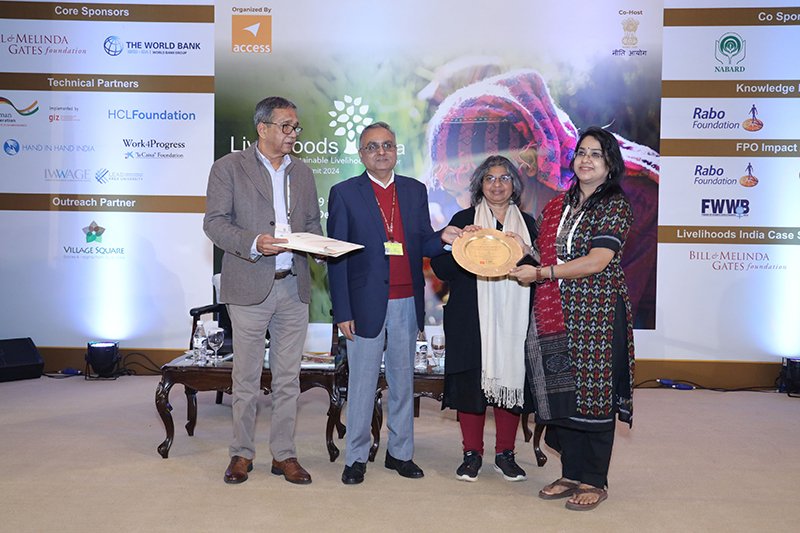
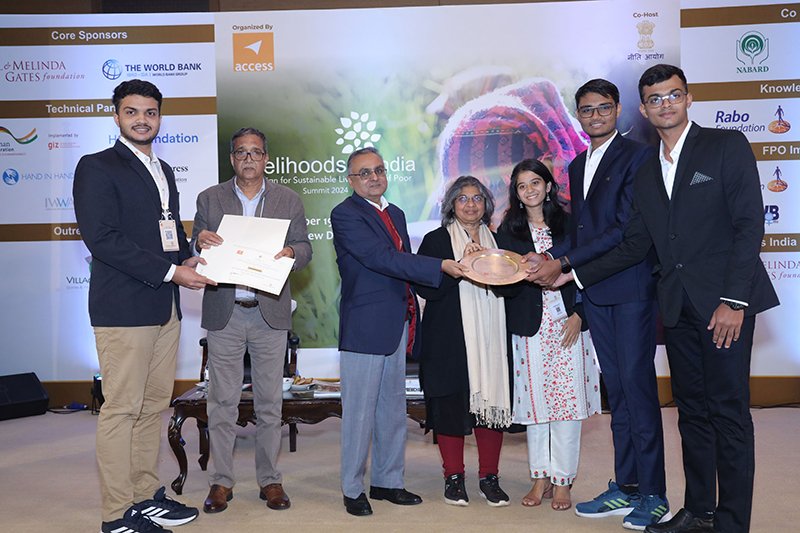
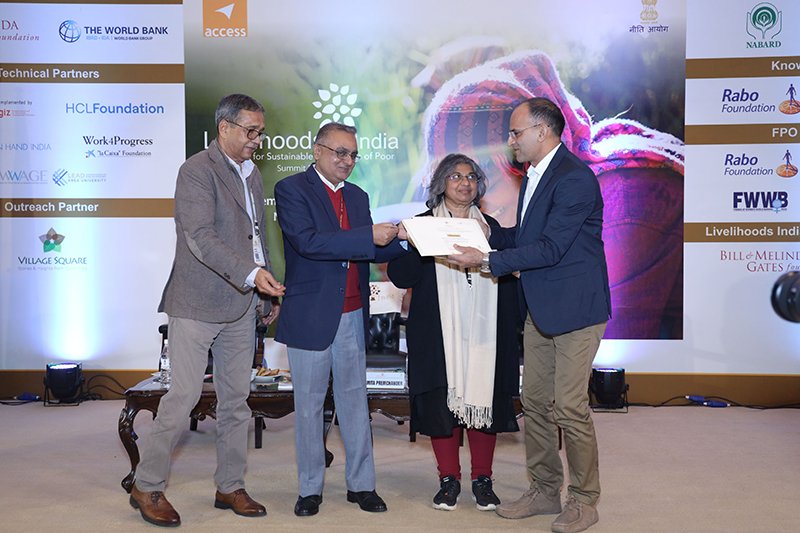
The Competition involves a well-structured five-stage robust process designed to ensure that the best cases make it to the top ten. The authors of the three best cases will be felicitated with a plaque and the certificate at the Livelihoods India Summit 2025.
- All entries should be submitted in English
- Each entry can have a maxim of three authors
- The case study must not exceed 5000 words (excluding tables)
- The case being written about should pertain to an initiative that has been operational for a minimum of 1.5 years
- All entries should be submitted in a pdf document, with font Times New Roman (size: 11), line spacing (1.5) and margins (1″ on all sides)
- All cases must be based on a real-life livelihoods case
- Applicants should avoid case studies on organisations already written about extensively
- In the event that the case being documented is based on a practice of any institution/ organisation with which the applicant is not affiliated, the applicant must take written permission from the concerned institution/organisation and provide a copy of the same
- The case must be unpublished at the day of submission and should not be under consideration for publication elsewhere, even in a slightly modified form
- All entries will be screened for plagiarism
- The veracity of the cases may be checked
- The decision of the Jury will be final and binding
SUGGESTED GUIDELINES FOR CASE WRITING
What is a Case?
A case is a story / snapshot taken at a particular point in time, written to serve a particular discussion or teaching objective. A good case has the following attributes:
- It clearly presents the case problem / issue (s) and calls for resolution and action.
- It puts the reader into the protagonist’s (community or the implementing organisation) shoes to enhance involvement in the learning process.
- Importantly, it is to the point and presents only essential and relevant facts to analyse the discussion problem. However, some amount of additional information can also be given within the case or in the annexure.
Case Structure
I. The Opening Paragraph
This is considered the most important portion of the case. In this paragraph, the case author presents the general picture and tone of the case. Please note that it is neither a summary of the case nor the abstract of a research article. The opening paragraph should:
- Present a concise and interesting picture of the main issue(s) in the case
- Describe the context within which the case occurs
- Introduce the principal protagonist(s)
- Set the timeline
- You can also finish the opening paragraph with one or two overriding questions facing the targe population/ implementing agency in the case
Thus, the opening paragraph should essentially provide a summary of these five questions:
- WHAT is the nature of the problem/issue (s)?
- WHO are the key decision makers? /who were involved or affected?
- WHY did the problem occur /arise?
- WHERE did the case take place (specify the organisation)?
- WHEN did the case take place (specify thetimeline)?
II. Body of the Case
1. To ensure a logical flow you can:
- Start with antecedents on the issue, starting with environmental, geographical and situational information
- Describe the situation/ problem in its complexity
- What are the available alternatives and their constraints to address the problem
- Provide rich data related to alternatives, in exhibits
- What interventions were made and what ‘considerations’ (criteria) compelled the particular interventions
- Identify the key challenges faced in implementation
- Highlight the impact of the interventions
- Analyse the key causes of the success / failure of the interventions
2. Preferably have data for analysis.
3. Tables, figures or graphs related to case should be in the main body while background tables/figures/data in annexure.
4. In general, the case should be information rich.
III. Concluding Portion of the Case
In the last portion of the case, you can provide a summary of the case reiterating the main issues. Going forward, the future scenario can also be presented and suggestions can be made in relation to improving the scenario. In addition, you can raise new questions.
GENERAL WRITING PRINCIPLES
- Use simple and clear English
- Use neutral language
- Present factual information/ data
- As a case writer, you should play the role of an honest reporter without “taking sides” and avoid presenting your own viewpoints as this might lead to author bias
- Write in past tense
PRIVACY CLAUSE
The screening of the case study will be based on the following criteria:
i. Case Content Richness
ii. Case Writing Quality
iii. Case Utility/Relevance
Click here to Download the Declaration Form :
- A compendium of the 10 best cases will be released at the Livelihoods India Summit 2025.
- The 10 best cases writers will be felicitated on day two of Livelihoods India Summit 2025.
- The best 10 case authors will be invited to the Livelihoods India Summit 2025 at New Delhi with a waived registration fee.
Past Winners
| Sr. No. | Winning Case Study | Author |
|---|---|---|
| Winner | Innovating Livelihoods through SHG Engagement in WASH Services: A Case from Small and Medium Towns of Maharashtra, India | Arwa Bharmal, Kasturi Joshi |
| First Runner-up | From Dreams to Dignity - The Umang Story Empowering Urban Marginalized Women through Collective Livelihood Options | Pallavi Barua, Bhagyashri More |
| Second Runner-up | Didi’s Mealbox: Enhancing Incomes of Urban Poor Women through Community Cloud Kitchens | Saurabh Shukla, Sayani Chatterjee, Shantamay Chatterjee |
| Special Mention | Uplifting Women Street Vendors Programme: Towards Creating a Supportive Environment for Women Street Vendors | Tongtimenla Jamir, Neikule Doulo |
| Sr. No. | Winning Case Study | Author |
|---|---|---|
| Winner | Digital Naari: Sustainable Livelihood For Women | Dhivya Ravi, Jayatri Dasgupta, Arpit Shah |
| First Runner-up | Sustainable Transformation through Upcycling: A Case Study of reCharkha - Our Eco-Social Tribe | Anushka Kolte, Mohit Rudrakar, Shubham Desai, Swaroop Naik |
| Second Runner-up | Sky is the Limit for Dibyajyoti SHG: Case Study of WSHG Business of Millet-based products via e-Commerce Platform | Bhesaja Choudury, Swatee Misra, Aiswarya Parija, Subhashree Parida |
| Winning Case Study | Author |
|---|---|
| Haritha Karma Sena: The Green Army on the Frontlines of the War Against Waste | Anjana Sahu |
| Harnessing the Unearthed Potential: A Case Study on Scaling-up Ultra-Poor Women's Enterprise under Satat Jeevikoparjan Yojana (SJY) | Bihar Rural Livelihoods Promotion Society (BRLPS), JEEViKA |
| Nahari: Enterprising Tribal Women Popularise Tribal Cuisine | BAIF Development Research Foundation |
| A Story of Resilience and Transformation Catalysing Livelihoods and Energizing Communities Through Women’s Entrepreneurship | Hareesh BS, Sandip Pattanayak & Rema Sundar |
| Winning Case Study | Author |
|---|---|
| Safe Agri Value Chain; Strengthening Rural Resilience to Climate Impacts in Uttar Pradesh | Shramik Bharti |
| PVTG Women-Led Community Enterprise of Jharkhand | Suraj Kumar, Jharkhand State Livelihood Promotion Society Bishnu Charan Parida, Jharkhand State Livelihood Promotion Society Suvakanta Nayak, Jharkhand State Livelihood Promotion Society |
| A Silent Movement of Change in Remote Hills | Dr Shiv Kumar Upadhyaya, Watershed Management Directorate, Uttarakhand Deepak Shah, Watershed Management Directorate, Uttarakhand |
| Winning Case Study | Author |
|---|---|
| SEWA Transforms over 15000 Smallholder Farmers and Landless Laborers into Successful Entreprenuers, Leaders and Managers of their Individual and Collective Social Entreprises | Reema Nanavaty |
| Promoting Agribusiness among the Tribals : A case study of Sustainable Livelihood | Niraj Kumar and Mohd Zahid |
| Sustainable Rural Development : Lemongrass Processing and Value Creation | Col Raman Thapar and Rabina Jaiswal |
| Winning Case Study | Author |
|---|---|
| The Pink City Rickshaw Company : Driving Change for Women's Empowerment in Jaipur | Ayush Kasliwal and Surbhi Prajapati |
| Community Livestock Business Centre | Amit Asnikar |
| Food Entreprises: A Way for Women's Economic Empowerment | Bihar State Rural Livelihoods Project (BRLP) JEEVIKA |
| Winning Case Study | Author |
|---|---|
| Appropriating Technology for Ultra Poor Women : Smartphone Apps for Agricultural Improvement | Trickle Up Program |
| Farm Related Services via Mobile Phones in India : A Case of Micro-Warehousing for Farmers in Bihar | Prageetha G Raju |
| Dvara E-Registry : Leveraging Technology to Enhance Credit and Insurance Delivery to Small and Marginal Farmers in Odisha | Sanjay Mansabdar |
| Winning Case Study | Author |
|---|---|
| Catalysing Competitive Irrigation Service Market in North Bihar: The Case of Chakhaji Solar Irrigation Service Market | Neha Durga and Gyan Prakash Rai |
| Integrated Vegetable Cultivation in Odisha : Promoting a Climate Smart Viable Business Model | Padeep Kumar Mishra and Kushankur Dey |
| Sustainable Livelihoods and Adaptation to Climate Change | Bihar Rural Livelihoods Promotion Society |